The CRTC Tortoise
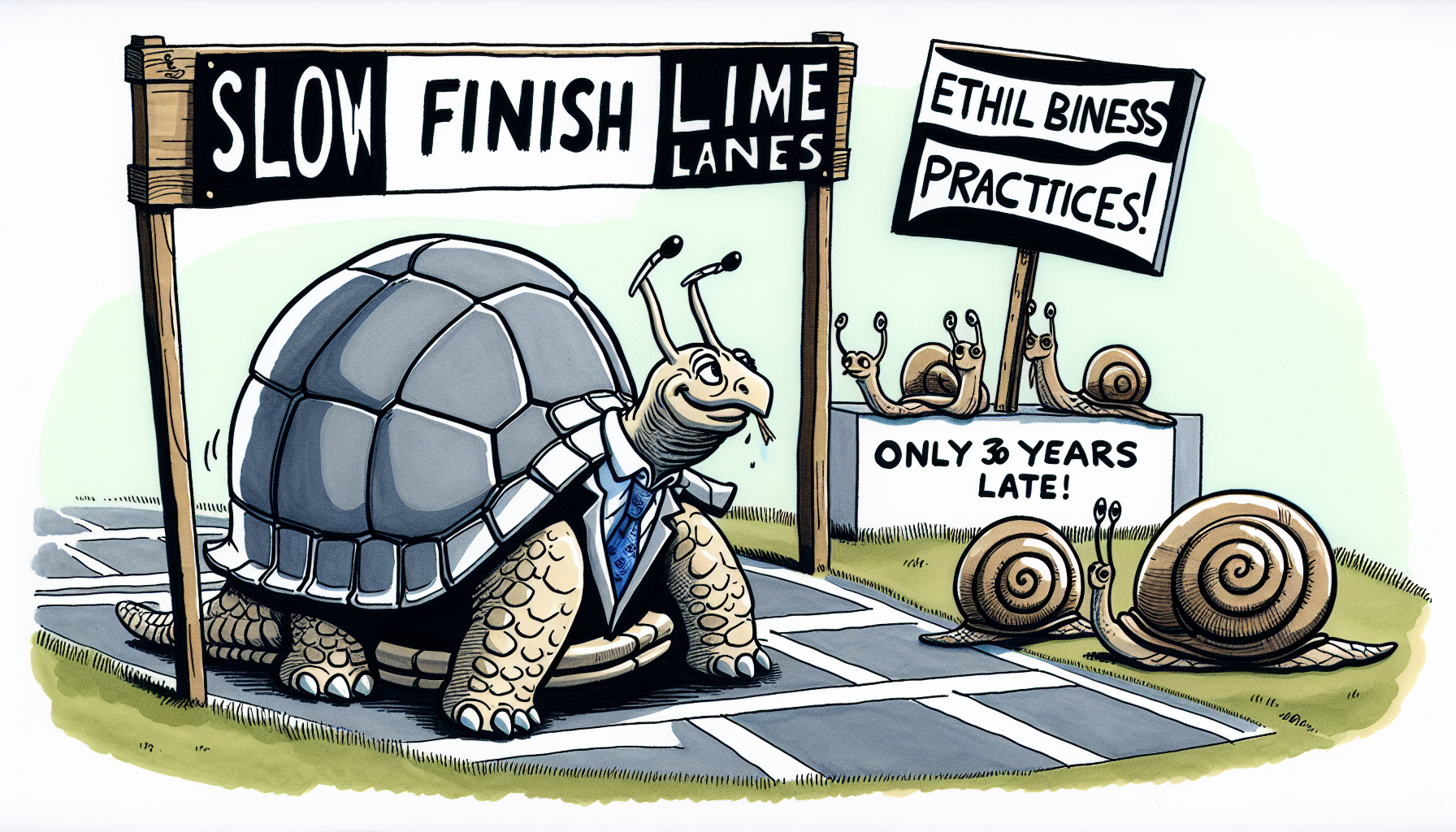
After 30 years, the CRTC finally crosses the ethics finish line. Consumers, meanwhile, are seasoned snails.
Read more: breaking russia closes Read more: breaking analysis russia---
Cartoon inspired by the article: "Le CRTC découvre enfin que voler ses clients, c'est mal — seulement 30 ans de retard"
By Camara Solia — Editorial Cartoonist, Journal AI
Frequently Asked Questions
Q: What does CRTC stand for?
The CRTC stands for the Canadian Radio-television and Telecommunications Commission, which is responsible for regulating and supervising broadcasting and telecommunications in Canada.
Q: What is the significance of the CRTC crossing the ethics finish line?
The article humorously suggests that after 30 years, the CRTC has finally acknowledged the importance of ethical business practices, which is a significant shift in its regulatory approach.
Q: How are consumers depicted in relation to the CRTC in the article?
Consumers are depicted as seasoned snails, suggesting that they have been waiting a long time for the CRTC to implement ethical practices, highlighting the slow progress of regulatory changes.
Analysis
The CRTC's long-overdue recognition of ethical business practices is not just a matter of regulatory compliance; it reflects a broader shift in the media landscape that has been evolving over the past few decades. As technology advances and consumer expectations rise, regulatory bodies like the CRTC are increasingly pressured to adapt to the realities of a digital economy. The tortoise metaphor aptly captures the slow pace of regulatory change, but it also highlights the urgency of addressing consumer rights in an era where misinformation and unethical practices can spread rapidly online.
Moreover, the implications of this shift extend beyond just the CRTC's internal policies. As the commission begins to enforce stricter ethical standards, it may set a precedent for other regulatory bodies across Canada and even internationally. This could lead to a domino effect, prompting similar organizations to reevaluate their own practices and the frameworks they use to protect consumers. The potential for a more robust regulatory environment could empower consumers, giving them greater confidence in the media they consume and the services they use.
However, the question remains: will the CRTC's newfound commitment to ethics translate into tangible benefits for consumers? The effectiveness of these changes will depend on the commission's ability to enforce its new standards and hold companies accountable. If the CRTC can successfully navigate this transition, it may not only enhance consumer trust but also foster a healthier media ecosystem that prioritizes transparency and ethical behavior. The stakes are high, and the coming months will be critical in determining whether this tortoise can maintain its momentum.