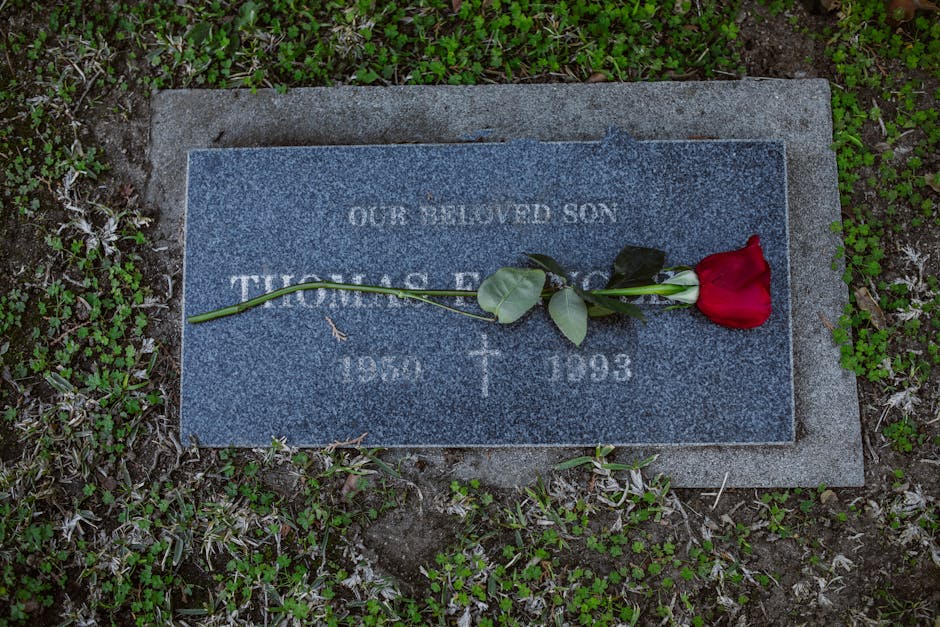
There are moments when a country reveals its soul. Friday night, when Robert Mueller's family announced with dignity the death of the special prosecutor at 81, America got one of those moments of brutal truth. While loved ones mourned a man who had served his country for decades, Donald Trump chose to celebrate: "I'm glad he's dead."
Four words. Four words that sum up everything wrong with American politics in 2026.
Indecency as Political Strategy
Read more: breaking analysis trumpsImagine this scene in any other democracy. Read more: breaking analysis trumps In France, even Marine Le Pen would have found a diplomatic formula to mark the occasion. In Canada, even Trudeau's fiercest critics respect the dead. In China, where political dissent can be costly, they at least maintain the appearance of posthumous respect.
But in the United States? Trump transforms a death into an opportunity for score-settling. And most troubling, according to early reactions reported by the New York Times and CNN, his supporters are applauding.
Robert Mueller wasn't an enemy of America. He was a Republican, former FBI director, former Marine decorated in Vietnam. A man who had devoted his life to public service. His investigation into Russian interference in 2016 may have been inconvenient for Trump, but it was legal, necessary, and conducted by the rules.
No matter. In Trump's America of 2026, investigating a politician makes you a traitor. And traitors, apparently, deserve to have their deaths celebrated.
The International Contrast is Striking
While Trump celebrates, let's look at how other countries handle their inconvenient investigators. In France, investigating judges who bother presidents sometimes get transferred, but never insulted post-mortem. In Canada, parliamentary inquiries into government scandals unfold in a tense but civilized climate. Even in China, where criticism of power is suppressed, they maintain a facade of institutional respect.
Only Trump's America has normalized personal hatred as a response to justice. Only this America transforms a prosecutor into public enemy number one. Only this America applauds when its institutions die — literally.
The Mueller Legacy: More Relevant Than Ever
Mueller is dead, but his 448-page report remains. His conclusions about Russian interference remain. The 34 indictments from his investigation remain. The convictions of Paul Manafort, Rick Gates, Michael Flynn and others remain.
What Trump is celebrating isn't the disappearance of evidence — it's public. It's the disappearance of the symbol. Mueller embodied the idea that in America, no one is above the law. His death allows Trump to dance on that idea.
The timing is revealing. We're in March 2026, eight months from a crucial presidential election. Trump, the likely Republican nominee, uses this death to remind his troops that he never forgets his enemies. Even dead ones.
The Normalization of the Abnormal
What strikes me most about this story is how accustomed we've become to the unacceptable. In 2016, such a statement would have provoked bipartisan outrage. In 2026, it barely raises eyebrows.
American media report Trump's quote as if it were normal political opinion. CNBC mentions it between two stock market analyses. France24 treats it as just another American curiosity. Only the BBC seems to realize the enormity of the thing.
This normalization may be the real danger. When celebrating the death of a public servant becomes mundane, when indecency becomes electoral strategy, when hatred replaces debate — what's left of democracy?
America Faces the Mirror
Mueller's death forces America to look in an unflattering mirror. On one side, a man who served his country with honor for decades. On the other, a politician who transforms this death into a spectacle of hatred.
Between them, 330 million Americans who must choose what country they want to be.
The rest of the world is watching. In France, they're questioning the solidity of the Atlantic alliance with a country where justice has become partisan. In Canada, they're wondering how to negotiate with neighbors who celebrate the death of their own institutions. In China, they're probably smiling: America is doing the undermining work itself.
Mueller died serving his country to the end. Trump lives destroying it a little more each day.
VERDICT: 0/10 for decency, 10/10 for revealing who you really are. America just showed its true face — and it's not pretty to see.
Frequently Asked Questions
Q: What did Donald Trump say about Robert Mueller's death?
Trump infamously stated, "I'm glad he's dead," which has been interpreted as a reflection of his approach to political adversaries and the current state of American politics.
Q: How do other countries react to the deaths of political figures compared to the U.S.?
In countries like France and Canada, there is a tradition of showing respect for the deceased, even if they were political opponents. In contrast, Trump's reaction to Mueller's death starkly highlights a normalization of personal animosity in American political discourse.
Q: Who was Robert Mueller and why was he significant?
Robert Mueller was a former FBI director and a decorated Marine who served his country for decades. He is best known for his investigation into Russian interference in the 2016 U.S. presidential election, which was seen as a crucial and necessary legal inquiry.