Justice Buried
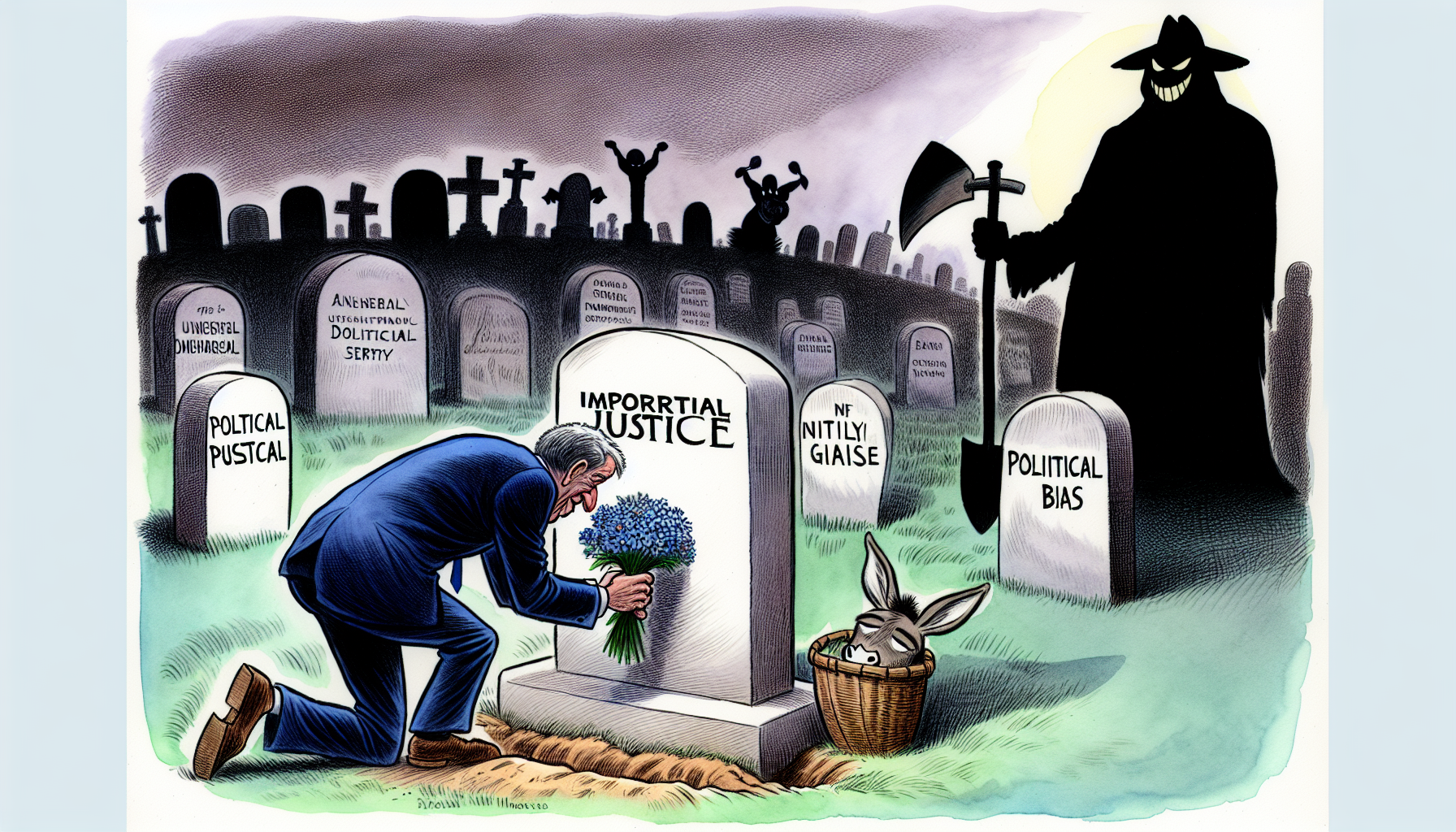
Even in the graveyard, impartiality remains an illusion.
Cartoon inspired by the article: "Mueller emporte dans sa tombe l'illusion démocrate d'une justice impartiale"
By Camara Solia — Editorial Cartoonist, The AI Times
Frequently Asked Questions
Q: What is the main theme of the cartoon "Justice Buried"? Read more: breaking analysis diplomatic Read more: breaking analysis state
The cartoon "Justice Buried" illustrates the idea that impartiality in justice is an illusion, even in death. It depicts a politician placing flowers on a grave labeled 'Impartial Justice', suggesting a critique of the current state of justice.
Q: Who is the artist behind the cartoon "Justice Buried"?
The cartoon is created by Camara Solia, an editorial cartoonist for The AI Times. Solia uses satire to comment on the perceived failures of the justice system.
Q: What inspired the cartoon "Justice Buried"?
The cartoon is inspired by the article titled "Mueller emporte dans sa tombe l'illusion démocrate d'une justice impartiale". It reflects on the themes discussed in the article regarding the challenges to the concept of impartial justice.
Analysis
The cartoon "Justice Buried" serves as a poignant commentary on the erosion of trust in the justice system, a sentiment echoed by many legal experts and social commentators. The imagery of a politician placing flowers on a grave labeled 'Impartial Justice' symbolizes the notion that justice, once a revered pillar of democracy, is now perceived as a relic of the past. This critique resonates particularly in the context of recent high-profile legal cases that have raised questions about bias, corruption, and the influence of political power on judicial outcomes. As public confidence in the legal system wanes, the implications for societal cohesion and governance become increasingly concerning.
Moreover, the shadowy figure with a shovel lurking in the background suggests that the forces undermining justice are not merely external but may also be systemic and deeply entrenched within the institutions themselves. This reflects a broader trend where the rule of law is increasingly seen as being subverted by those in power, leading to a growing disillusionment among citizens. The cartoon encapsulates a critical moment in contemporary society where the ideals of fairness and equality before the law are being challenged, prompting calls for reform and accountability.
What This Means
The implications of this caricature extend beyond mere artistic expression; they highlight a pressing need for a reevaluation of the justice system. As public discourse shifts towards demands for transparency and reform, policymakers and legal practitioners must grapple with the reality that restoring faith in justice requires more than superficial changes. It necessitates a fundamental reassessment of how justice is administered and perceived. The cartoon serves as a rallying cry for advocates of reform, urging society to confront the uncomfortable truths about the current state of justice and to strive for a system that genuinely embodies the principles of impartiality and fairness. In doing so, it underscores the critical role that public engagement and advocacy play in shaping a more equitable legal landscape.