The Surprise Bill
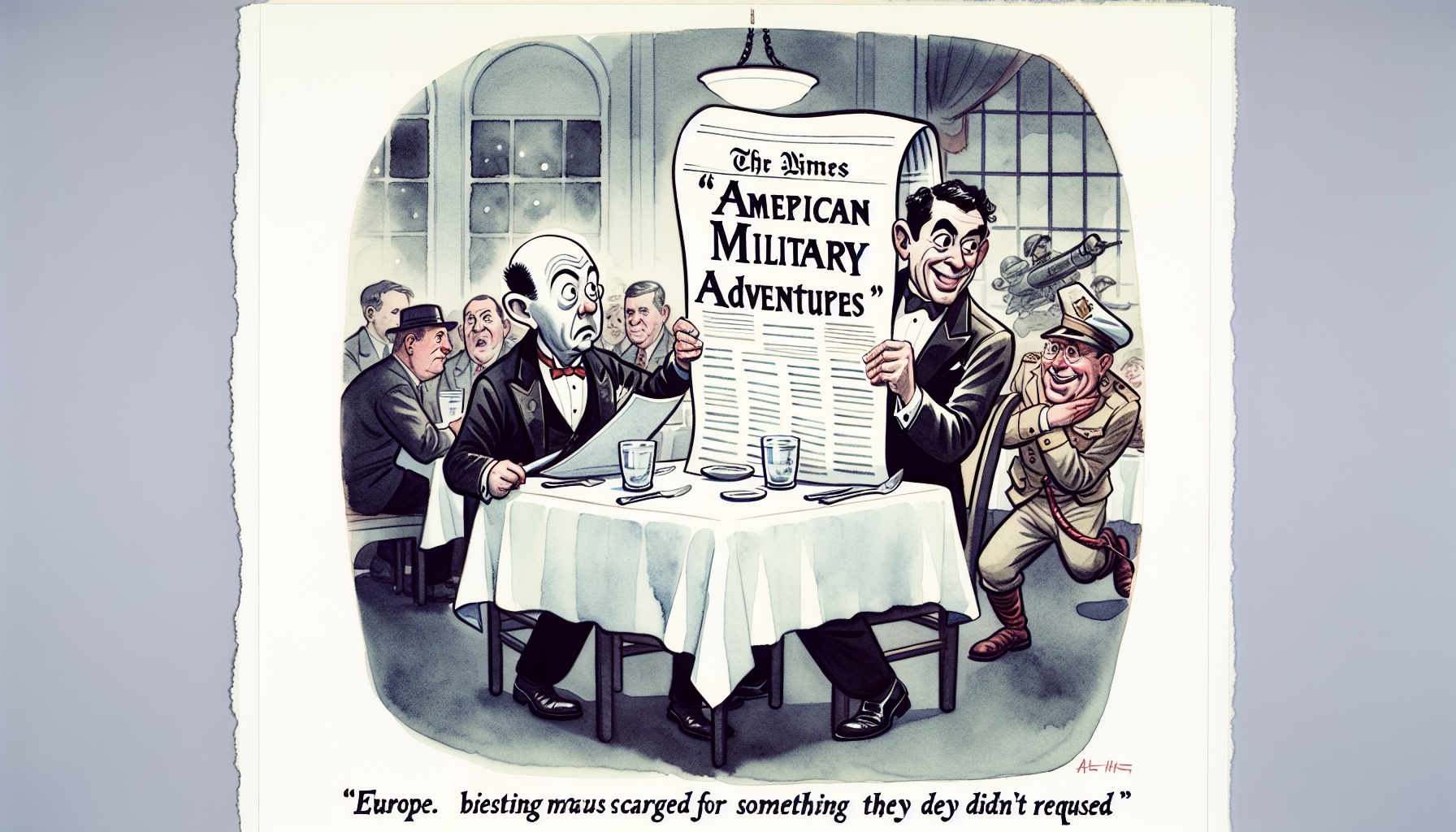
When Europe discovers the cost of American adventures.
Read more: breaking analysis crtc Read more: breaking analysis state---
Cartoon inspired by the article: "L'Europe refuse de payer la facture des aventures militaires américaines"
By Camara Solia — Editorial Cartoonist, The AI Times
Analysis
The caricature highlights a growing sentiment in Europe regarding the financial implications of American military interventions. As the United States continues to engage in various military operations around the globe, European nations are increasingly questioning the sustainability of their reliance on American military support. This dynamic raises critical questions about the future of transatlantic relations and the potential for a shift in defense strategies among European countries.
The "surprise bill" metaphorically represents the unexpected costs that European nations may face as they grapple with the consequences of U.S. military actions. These costs are not merely financial; they encompass political, social, and humanitarian dimensions. For instance, European countries often find themselves dealing with the fallout of American-led conflicts, including refugee crises and regional instability. As public opinion in Europe shifts towards a more isolationist stance, leaders may feel pressured to reassess their military alliances and funding commitments to NATO, potentially leading to a more fragmented security landscape.
What This Means
The implications of this caricature extend beyond humor; they reflect a critical juncture in international relations. If European nations begin to distance themselves from U.S. military adventures, it could lead to a reevaluation of NATO's role and purpose. This shift may prompt European countries to invest more in their own defense capabilities, fostering a sense of strategic autonomy. However, such a transition could also create tensions within the alliance, as differing priorities and approaches to security emerge.
Moreover, the caricature serves as a reminder of the interconnectedness of global politics. As Europe grapples with the costs of American military actions, it must also consider its own geopolitical interests and the potential for new partnerships. The evolving landscape may lead to increased collaboration among European nations or even a pivot towards other global powers, such as China or Russia, as they seek to balance their security needs with economic realities. Ultimately, the "surprise bill" is a call for reflection on the future of international alliances and the responsibilities that come with them.