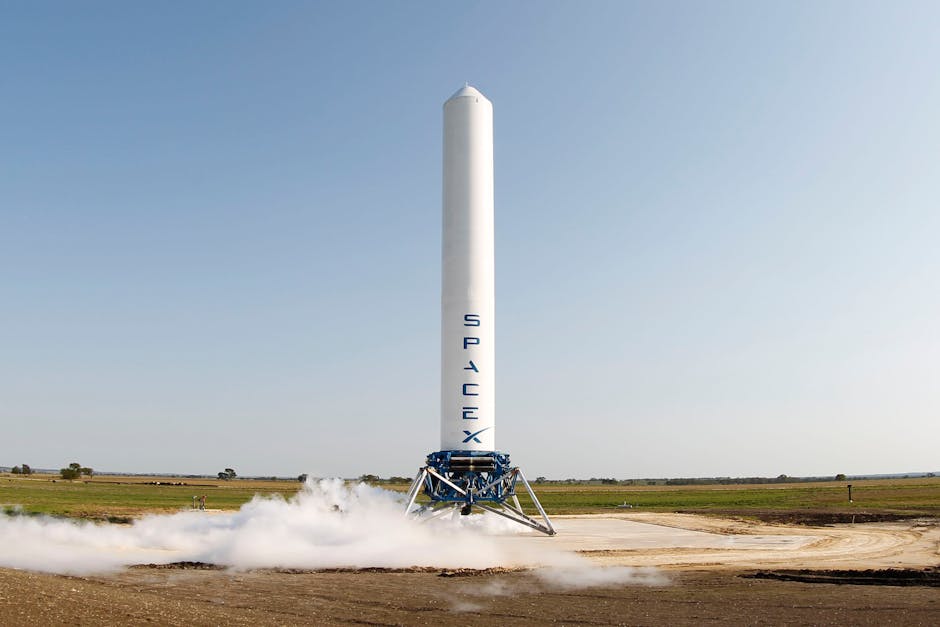
As Wall Street prepares to close in an hour (4:00 PM ET), American investors are still digesting the announcement that has been shaking markets since this morning: SpaceX is preparing for this summer the largest initial public offering in history, with a $50 billion raise that would value Elon Musk's company at $1.75 trillion. A dizzying figure that reveals above all how much our financial markets have lost all contact with economic reality.
To put this valuation in perspective: SpaceX would be worth more than the GDP of most European countries. More than the entire global automotive sector. More than all the world's airlines combined. For a company that, while revolutionary in its technical approaches, remains fundamentally a space launch service provider with some government contracts and still largely hypothetical projects.
The Space Bubble Mechanics
Read more: iran handed companies Read more: iran plays fireAccording to Bloomberg, which reports this information, conversations in the industry already suggest that "many investors could be disappointed." An understatement that speaks volumes about the gap between market expectations and SpaceX's operational reality.
Because behind the rockets that take off and the Starlink satellites, what exactly do we find? A certainly innovative company, but whose revenues remain largely dependent on NASA and Pentagon contracts. The Mars project? Still a dream. Space tourism? A niche market for billionaires. Starlink? Promising, but facing intensifying competition and astronomical infrastructure costs.
This $1.75 trillion valuation rests on a bet: that SpaceX will dominate tomorrow's space economy like Google dominates online search today. Except space is not the internet. Entry barriers are certainly enormous, but nation-states will never let a private company alone control space highways. China is developing its own capabilities, Europe too, and even India is rising in power.
Who Wins in This Equation?
As always, follow the money. This record IPO primarily benefits SpaceX's historical investors - venture capital funds, family offices, and of course Elon Musk himself. These players, who entered when the company was worth a few billion, are preparing to realize stratospheric capital gains.
Future public shareholders, meanwhile, will buy at a high price a company already overvalued. Recent history has shown us what these "unicorn" IPOs deliver: think of WeWork (valued at $47 billion before collapsing), or more recently the troubles of numerous tech companies introduced at market peaks.
Bailey Lipshultz, who follows this case for Bloomberg, emphasizes that this IPO is already attracting "wealthy investors and institutional supporters." Translation: the big fish are positioning themselves, leaving small investors to foot the bill when reality catches up with valuations.
The Space Economy, Really?
Let's not be mistaken: SpaceX has revolutionized the space industry. Reusable rockets have slashed costs, launches have multiplied, and the company has given the United States autonomous space access capability. All of this is undeniable and deserves recognition.
But transforming these technical successes into justification for a $1.75 trillion valuation is an act of faith. The global space economy today represents about $400 billion per year. SpaceX would therefore be worth more than four times the entire market it's supposed to dominate.
This disconnection reveals a broader phenomenon: since 2008 and ultra-accommodative monetary policies, financial markets have evolved in a liquidity bubble that pushes valuations to delirious heights. When central banks flood the system with liquidity, this money has to go somewhere. It ends up in bets on the future, increasingly disconnected from the present.
The Timing Is Not Innocent
That this IPO is scheduled for summer 2026 is no coincidence. American markets, which close in a few minutes, still evolve in an environment of relatively low rates despite recent increases. Institutional investors, gorged with liquidity, desperately seek returns in a world where government bonds yield little.
Tomorrow morning, when European markets open (9:00 AM in Paris and Frankfurt, 8:00 AM in London), then overnight our Asian markets (9:30 AM in Shanghai, 9:00 AM in Tokyo), this announcement will continue making waves. Because SpaceX perfectly embodies the global appetite for "growth stories" that justify any valuation.
History's Lesson
Economic history teaches us that the biggest IPOs often arrive at cycle peaks. When everyone wants to buy, it's generally time to sell. This SpaceX IPO at $1.75 trillion could well mark a turning point: when financial markets will have definitively lost all connection with economic reality.
Because ultimately, it doesn't matter whether SpaceX revolutionizes space access or not. What matters is that this valuation reveals the state of our markets: giant casinos where we bet on dreams rather than companies. And like in any casino, the house always wins. The question is knowing who, exactly, is the house in this story.
Frequently Asked Questions
Q: What is the valuation of SpaceX in its upcoming IPO?
SpaceX is preparing for the largest initial public offering in history, aiming to raise $50 billion, which would value the company at $1.75 trillion.
Q: How does SpaceX's valuation compare to other industries?
SpaceX's valuation would exceed the GDP of most European countries, the entire global automotive sector, and all the world's airlines combined, highlighting the disconnect between market expectations and economic reality.
Q: What are the main sources of revenue for SpaceX?
SpaceX's revenues are primarily dependent on government contracts from NASA and the Pentagon, with its ambitious projects like Mars exploration and space tourism still largely in the conceptual phase.