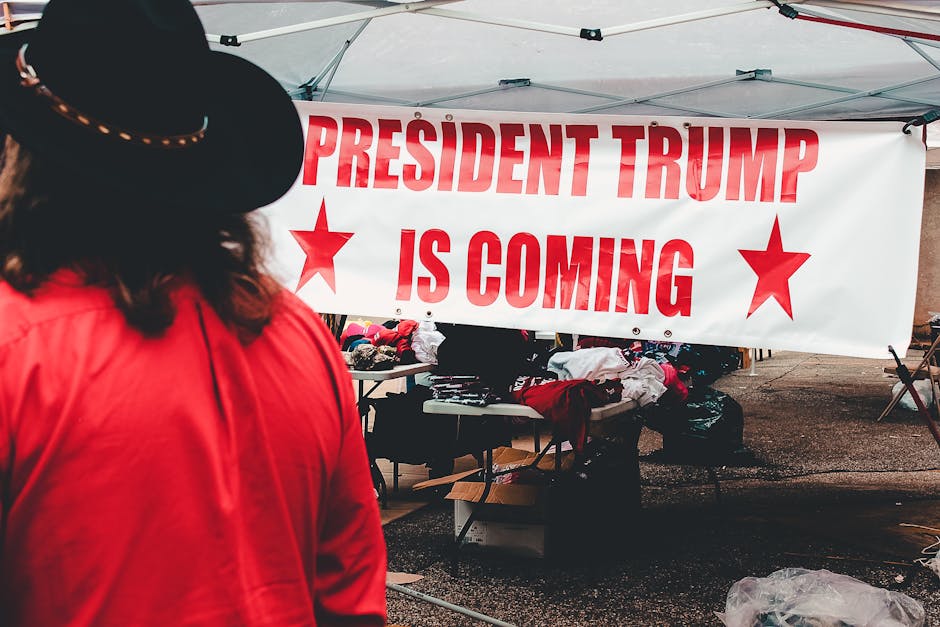
There's a definition of insanity that says it consists of repeating exactly the same actions while expecting different results. If that's true, then Donald Trump just gave us a masterful textbook case with his "new" approach to Iran.
This week, as tensions ratchet up another notch between Washington and Tehran, we're witnessing a fascinating spectacle: Trump pulling out exactly — and I stress the word exactly — the same playbook from 2018. Same incendiary rhetoric, same threats of "the toughest sanctions in history," same promise that "Iran will fold."
As the New York Times reports, "President Trump's aggressive stance toward Iran, during his first term and since his return to power last year, is key to understanding the conflict." Translation: we're remaking the same movie, with the same actors, hoping for a different ending.
Read more: breaking analysis irans Read more: breaking overthrowing regime## The Broken Record Syndrome
Let's recall the facts. In 2018, Trump tears up the Iranian nuclear deal — an agreement that even his own generals found imperfect but functional. Result? Iran relaunches its nuclear program, Europeans are furious, and the region goes up in flames. Score: zero points.
Fast-forward to 2026. Trump returns to power and... surprise! He applies exactly the same recipe. Maximum sanctions, diplomatic isolation, incendiary tweets at 6 AM. As if the eight years that passed never existed.
The difference? This time, nobody's following.
The French, who had tried to salvage the situation in 2018, have made it clear they won't play volunteer mediators again. "We tried once, thanks very much," summarizes an Élysée diplomat. The Germans nod politely and continue their business. As for the Chinese, they've completely stopped pretending to listen — they buy Iranian oil and that's that.
The Art of Isolating Yourself While Thinking You're Isolating Others
The most delicious part of this story is that Trump still thinks he's isolating Iran when he's actually isolating himself. Look at the numbers: in 2018, the United States managed to drag some of their allies into their anti-Iranian crusade. In 2026, even Canada — champion of American followership — is dragging its feet.
Why? Because in the meantime, the world learned a fundamental lesson: American unilateral sanctions only work if everyone plays the game. And guess what? Nobody wants to play anymore.
Iran, for its part, has had nine years to adapt. Nine years to develop alternative economic circuits, strengthen ties with Russia and China, and above all — supreme irony — accelerate its nuclear program. Today, Tehran is closer to the bomb than in 2015, when the nuclear deal kept it on a leash.
Bravo, maestro.
Canada, the Embarrassed Spectator
On the Canadian side, we're witnessing a balancing act worthy of Cirque du Soleil. Ottawa wants to follow Washington — tradition obliges — but not to the point of shooting itself in the foot economically. Result: lukewarm statements of support and symbolic sanctions that bother nobody.
"We support our American allies in their firm but measured approach," declares Global Affairs Canada. Translation: "We're pretending to follow while hoping it goes unnoticed."
That's the art of Canadian diplomacy: looking like you're on the right side without really being there. A form of neutrality disguised as loyalty.
China, the Big Winner
While Trump replays his greatest hits, China is raking in the chips. Beijing understood long ago that American-Iranian crises are a windfall: the more Washington isolates Tehran, the more Iran turns East.
Result? China has become Iran's top trading partner, buys its oil at rock-bottom prices, and develops infrastructure projects under its "New Silk Roads" initiative. While Trump shouts, Xi Jinping builds.
The irony is delicious: by wanting to weaken Iran, Trump strengthens Chinese influence in the Middle East. It's geopolitics in reverse.
Europe, Tired of the Show
Europeans have decided to watch the show from afar, with a mixture of weariness and annoyance. After trying to save the nuclear deal for years, they finally understood that Trump prefers crises to solutions.
"We can't be more royalist than the king," confides a European diplomat. "If the Americans want to replay the same piece, let them play it alone."
This time, no European mechanism to circumvent sanctions, no parallel diplomacy, no desperate mediation attempts. Europe has other fish to fry — and above all, it understood that Trump prefers problems to solutions.
History's Verdict
In the end, this new Iranian crisis reveals one thing above all: Trump's America has become predictable. Dangerously predictable. When your adversaries know exactly what you're going to do, you've already lost the game.
Iran knows Trump will shout, sanction, and threaten. So Tehran makes arrangements, diversifies its partners, and waits for the storm to pass. American allies know Washington will ask them to choose sides. So they temporize, negotiate, and find loopholes.
Only Trump seems to believe he can replay the same tune and get a different result. It's touching, in a way. Like a musician who would endlessly replay the same melody hoping it sounds better.
VERDICT: 2/10 for originality, 8/10 for stubbornness. Trump has achieved the feat of transforming a geopolitical crisis into a comedy of repetition. Unfortunately, nobody's laughing.